
Industrial parks play an important role in manufacturing, logistics and economic development. However, their operations also depend on substantial energy and infrastructure resources. From electricity for production to heating, lighting and transport, energy use affects both operating costs and environmental performance. As businesses face growing pressure to improve resource efficiency, sustainable energy solutions are becoming an increasingly important consideration when choosing and developing industrial premises.
Why energy sustainability matters in industrial parks
Industrial facilities can have varied energy requirements depending on their activities. Manufacturing operations may need electricity for machinery, compressed air and production processes. Warehouses rely on lighting, material-handling equipment and, in some cases, temperature control. Offices have their own heating, cooling, lighting and IT requirements.
This variety makes industrial parks particularly interesting from a sustainability perspective. When multiple businesses operate within one location, shared infrastructure and coordinated resource management can create opportunities to improve efficiency.
Implementing sustainable energy solutions is therefore not simply about installing renewable energy equipment. It also involves understanding where energy is consumed, identifying avoidable losses and ensuring that buildings, equipment and infrastructure are used effectively. For businesses, these measures can support several objectives. They can help managing energy expenditure, reducing unnecessary consumption, strengthening operational resilience and making progress towards environmental targets.
Energy efficiency starts with the building
Before investing in new energy technologies, companies should understand how efficiently their existing premises operate. Building characteristics, insulation, lighting systems, equipment and maintenance routines can all influence energy consumption.
Industrial buildings present different challenges from conventional offices. Large halls may have high ceilings, extensive floor areas and frequently opened loading doors. Production facilities may require particular ventilation, lighting or temperature conditions. Consequently, improvements need to reflect the purpose of the building rather than follow a single standard approach.
Several practical measures are worth considering:
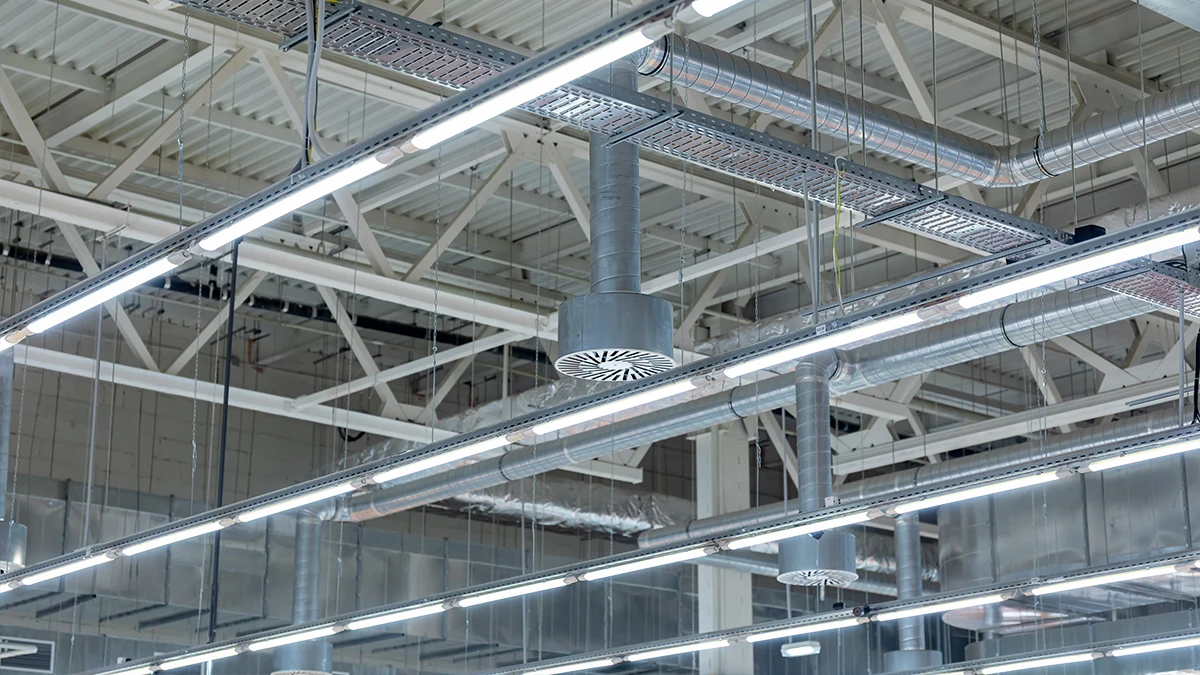
- LED lighting: Replacing inefficient lighting with LED systems can reduce electricity consumption while maintaining appropriate illumination for work areas.
- Heating and cooling controls: Better scheduling, zoning and temperature management can help avoid heating or cooling spaces unnecessarily.
- Building insulation: Assessing roofs, walls, windows and doors can help identify opportunities to reduce heat loss or unwanted heat gain.
- Equipment maintenance: Well-maintained machinery, motors and ventilation systems can help prevent avoidable energy waste.
The best starting point is often an energy assessment that establishes a baseline and identifies the improvements with the strongest practical and financial case. This allows businesses to prioritise measures according to their needs, rather than investing in technology without first understanding the underlying problem.
Renewable energy: making use of local opportunities
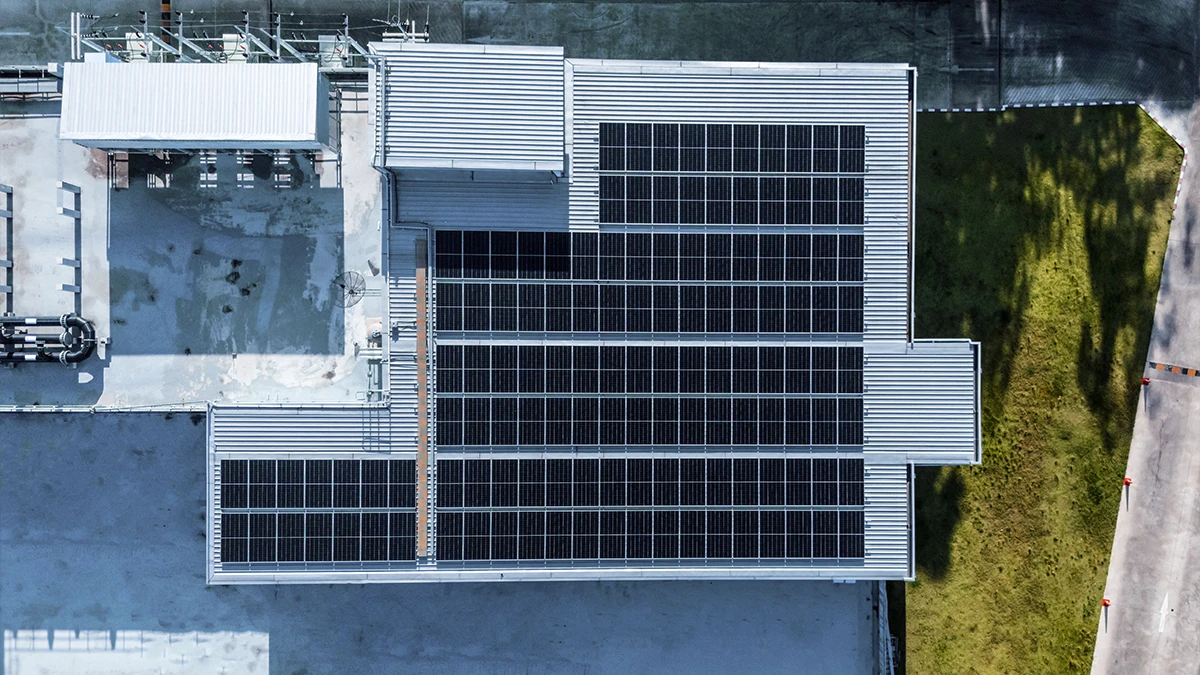
Renewable energy can form another part of an industrial park’s sustainability strategy. Solar photovoltaic systems, in particular, may be worth assessing where roof structures, available space, grid connections and electricity demand make them suitable. Industrial sites can sometimes offer advantages for solar development because of their large roof areas and substantial daytime electricity requirements. However, feasibility depends on the specific property. Roof condition and load-bearing capacity, shading, connection capacity, investment costs and the relationship between generation and consumption all need to be evaluated.
Where appropriate, a photovoltaic installation can help a business generate part of its electricity on site. The extent of the benefit will depend on system size, weather conditions, operational demand and the arrangements for using or exporting surplus electricity.
Energy storage may also be relevant in certain situations. Batteries can help businesses use some of their generated electricity at a different time. Although their economic value depends on factors such as electricity tariffs, consumption patterns, system costs and applicable regulations.
These considerations demonstrate why sustainable energy solutions should be developed around the actual characteristics of a facility. A technology that works well for one company may not be the right choice for another.
At Ikarus Industrial Park, we offer industrial properties and infrastructure that can be considered in the context of individual business requirements. Any renewable energy development would need to be assessed against the technical conditions and requirements of the particular building or site.
Smarter energy management through technology
Generating cleaner electricity is only one part of the wider energy transition. Businesses can also improve performance by monitoring consumption and managing when and how energy is used.
Digital energy monitoring systems can collect information from meters and equipment, helping facility managers understand consumption patterns. When the data is sufficiently detailed, it may reveal equipment operating outside normal hours, unexpected demand peaks or opportunities to coordinate energy-intensive processes more effectively.
Automation can support these efforts. Lighting controls, occupancy sensors and programmable heating systems, for example, can adjust operation according to actual requirements. In manufacturing environments, energy monitoring can also help identify processes that consume more electricity than expected.
However, digitalisation is most effective when it is connected to clear operational goals. Collecting data alone does not guarantee savings. Businesses also need to interpret the information, establish responsibilities and review whether changes are producing measurable results. For companies developing their energy strategy, a practical sequence is to measure current consumption, identify priorities, introduce suitable improvements and monitor the results. This creates a basis for making better-informed decisions about future investments.
Shared infrastructure and the role of industrial parks
An industrial park is more than a collection of individual buildings. Its infrastructure, services and management arrangements influence how businesses operate every day.
In this context, it is important to highlight the potential of coordinated approaches to energy, water and material use. Shared infrastructure and collaboration between businesses can help improve resource efficiency, while industrial symbiosis can create opportunities for one company’s by-products or resources to become useful inputs for another. These possibilities depend on local conditions and the participating companies, but they show how industrial parks can contribute to sustainability beyond individual buildings.
At Ikarus Industrial Park, we provide infrastructure and facility-management services that support the day-to-day operation of our tenants’ premises. Our official service portfolio includes energy services, the operation of common areas and technological facilities, green-area care and the maintenance of public spaces. Our site also has electricity, natural gas and water infrastructure.
These foundations matter because energy efficiency requires more than equipment inside an individual unit. The condition of buildings, the management of shared facilities and the coordination of infrastructure all influence how an industrial site functions. We also work with long-term tenants on property developments tailored to their requirements. This creates a basis for discussing technical and architectural changes in the context of a company’s operational needs.
Planning sustainable energy improvements for the future
There is no universal blueprint for a more energy-efficient industrial site. A warehouse, a manufacturing hall and an office building have different requirements. Therefore, their improvement plans should reflect how each space is used.
A sensible starting point is to review current energy consumption and identify the largest opportunities for improvement. Businesses can then assess measures such as lighting upgrades, building improvements, better equipment controls, renewable energy installations or storage. Each option should be evaluated for technical feasibility, investment requirements, expected performance and maintenance needs.
It is also important to consider how a property may support future changes. As production methods, equipment and business requirements evolve, a flexible industrial environment can make it easier to evaluate new technologies and implement suitable upgrades.
At Ikarus Industrial Park, we combine a diverse portfolio of manufacturing halls, warehouses, workshops and offices with infrastructure and supporting services. Our 530,000 m² site in Székesfehérvár includes 122,300 m² of available building structures, and we continue to work with tenants whose operational needs may require tailored property solutions.
We see sustainable energy solutions as part of a wider conversation about how industrial spaces can remain practical, efficient and adaptable. By understanding energy use, prioritising evidence-based improvements and assessing technologies against real operational needs, businesses can take meaningful steps towards more responsible resource management.